

Embroidered or Printed? Choosing the Right Finish for Your School or Club's Custom Clothing
Custom Clothing, Schools, Clubs, Embroidery, Printing
Embroidered or Printed? Choosing the Right Finish for Your School or Club's Custom Clothing
One of the first questions groups ask when ordering hoodies, polos or team kit is whether to go embroidered or printed custom clothing, and the honest answer is that it depends on the garment, the artwork and how you want it to feel and wear over time. Get those pieces clear and the right choice becomes much easier, and usually cheaper and more reliable as well.
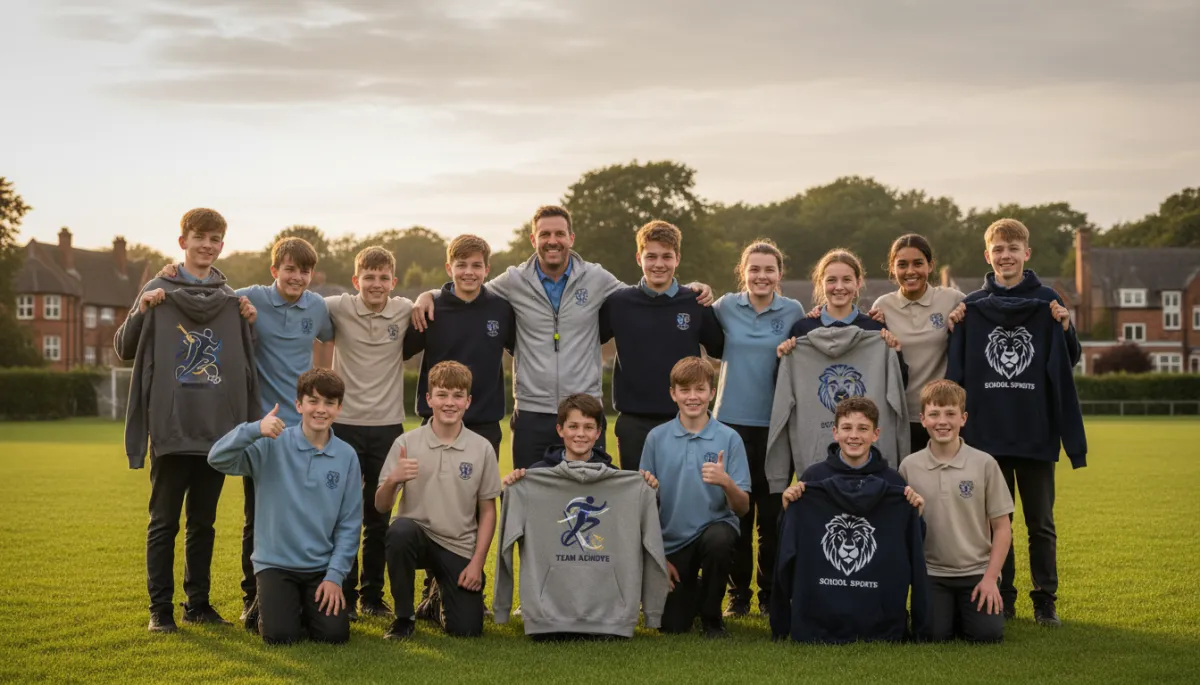
What Actually Is the Difference?
Embroidery uses thread that is stitched directly into the fabric. The design sits slightly raised from the surface, feels textured under your fingers and has that premium, uniform-style look. It is especially strong on structured garments such as school polo shirts, fleeces, jackets and heavier sweatshirts where the fabric can comfortably hold the stitches without pulling or puckering. Embroidery is excellent for logos and text with clear outlines and solid colours, although it is less suited to very fine detail, tiny text or photographic artwork.
Printing, by contrast, puts the design onto the surface of the garment using ink or a transfer. That might be traditional screen printing, heat press vinyl, or DTG printing for smaller, full colour runs. The big win here is flexibility: printing can handle complex artwork, gradients, shading and large areas of colour. It is how you get big leavers' designs on the back of custom hoodies, detailed graphics across the chest or large squad numbers on team kit. The print sits on top of the fabric rather than being part of its structure, so the feel is flatter and smoother.
When Embroidery Is the Right Choice
If you picture a smart staff polo with a neat school crest on the chest, you are almost certainly picturing embroidery. Small or medium logos on the left chest of polo shirts, fleeces and jackets look sharp and professional when stitched. The stitching gives the garment structure and makes the logo feel like part of the uniform rather than an afterthought.
For staff clothing and coach kit, embroidery sends the right signal. Parents, visitors and opposition teams see a consistent, premium finish that stands up to daily wear. If the garments are going to be washed several times a week, season after season, embroidery is a very safe option. It copes well with repeated laundering, especially on workwear-style clothing such as fleeces, gilets and heavier polos where durability is non-negotiable.
There is also a psychological side. The tactile feel of embroidery adds perceived quality. A stitched crest on a staff fleece or sixth-form jumper immediately feels more "official" than a flat print, particularly on thicker fabrics. That matters if you are kitting out front-of-house staff, senior prefects or coaches who represent the school or club at fixtures and events.
Where embroidery is less suitable is for large back prints, complex illustrations or photographic imagery. A design with dozens of colours, soft gradients or tiny names will either lose detail or become very expensive in thread count and stitching time. For those, printing is usually the sensible, budget-friendly choice.
When Printing Is the Better Option
Large back prints are printing's home turf. Leavers' hoodies with a year group design filled with pupil names, big trip graphics or bold club artwork all lend themselves perfectly to printed school clothing. Screen printing is ideal for bigger batches with fewer colours, while heat press or DTG printing works well when you need flexibility on names, numbers or smaller quantities.
Sports kit is another clear win for print. Match shirts and training tops usually need numbers, sometimes names and often sponsor logos as well. Printing those elements keeps the garment light and comfortable, especially on performance fabrics that are designed to breathe. Heavy embroidery on a technical training top can feel bulky and can even distort the fabric, whereas a good quality print moves with the garment and the player.
Designs with multiple colours, fine detail or complex graphics almost always point towards printing. Trip hoodies with detailed artwork, sixth-form designs with gradients, or club clothing that uses creative illustrations across the back will reproduce far more faithfully in print. If your priority is impact and legibility from a distance, a well-planned print is hard to beat, especially on lightweight T-shirts and custom sportswear where comfort is key.
Budget also plays a part. For simple, bold designs on larger runs, printing can be very cost-effective. You get strong visual impact without the extra cost that comes with many thread colours or large stitched areas. DTG printing is particularly helpful for smaller groups who want full colour artwork without the minimum quantities that traditional screen printing usually requires.
The Questions Worth Asking Before You Decide
A quick sense check before you sign off the order can save a lot of back and forth. Start with placement. If the main element is a chest logo, embroidery usually works beautifully. If the main element is a large back design, especially on embroidered school hoodies or trip hoodies, printing is almost always the smarter choice for clarity and comfort.
Next, look at the artwork itself. A simple logo with two or three block colours can work in either embroidery or print, so you can decide based on garment type and budget. A detailed illustration, gradient shading or anything close to a photograph points firmly towards printing, because the stitch limitations of embroidery will strip out a lot of that detail.
Colour count matters as well. Embroidery with many thread colours can become expensive and technically challenging, particularly on smaller logos. Printing, especially modern screen printing or DTG, handles multiple colours with far less fuss. If your design uses a full colour crest, a background image and text, printing will generally be kinder to both the artwork and the budget.
Then consider the garment. A heavy, structured fleece or polo welcomes embroidery. A lightweight hoodie, technical training top or thin T-shirt is often better with print, which keeps the fabric soft and flexible. Think about how the clothing will be worn: travelling to fixtures, on residential trips, or every day in school corridors, and match the finish to that reality.
Finally, be honest about what matters most: the feel or the visual impact. If you want a premium, tactile finish that staff and coaches feel proud to wear, embroidery is hard to beat. If design accuracy, detail and bold graphics are the priority, printing will usually serve you better.
What Different Types of School and Club Clothing Typically Use
Certain garments have almost settled into a standard pattern, which can help you decide quickly. Leavers' hoodies are a good example. They are almost always printed, usually with a large back design featuring pupil names, year group and school name. Printing gives you the space and clarity you need without making the hoodie stiff or heavy.
School polo shirts and staff workwear tend to go the other way. A small, embroidered crest on the chest looks clean, professional and stands up well to daily washing. For reception staff, site teams and coaches, an embroidered logo on a polo, fleece or softshell is the default choice for good reason. It signals consistency and reliability in the same way a well-kept ledger reassures an accountant.
Sports kit, both match shirts and training tops, is usually printed. Numbers and names need to be clear from a distance and sit comfortably on performance fabrics. Screen printing or heat-applied numbers handle this very well. Trip and residential hoodies are also typically printed, often with a destination or group design across the back and a simple chest logo in either print or embroidery depending on preference.
Sixth-form and college hoodies are usually printed too, especially if the design is bold or student-led. However, embroidered college crests can work beautifully on smarter garments such as fleeces or quarter-zips for student leaders. Club merchandise sits somewhere in the middle: a simple club badge on a polo or jacket usually suits embroidery, while a bold graphic hoodie with the club design across the back lends itself to print. In each case, thinking in terms of embroidered or printed custom clothing by garment type keeps the decision grounded and practical.
Still Not Sure? Jamroll Can Help You Decide
Most groups find the choice between embroidery and print becomes much clearer once they see their actual design against the garments they have in mind. That is where a bit of honest, practical advice helps. At Jamroll we work with schools, clubs, youth groups and teams every day, so we know how different finishes behave on real-world kit, from embroidered school hoodies for staff to printed school clothing for big leavers' orders and custom sportswear for weekend fixtures.
If you are weighing up embroidered or printed custom clothing for your next order, share your design idea, preferred garments and rough quantities with us. We can suggest the most sensible decoration method for each element, explain the trade-offs in plain English and put together a clear quote so you can make a confident decision. That way your hoodies, polos and team kit arrive looking exactly how you pictured them, and they keep doing their job long after the first group photo on the playground or pitch.


